
AnyBet Jamaica: licence chronology and evidence review

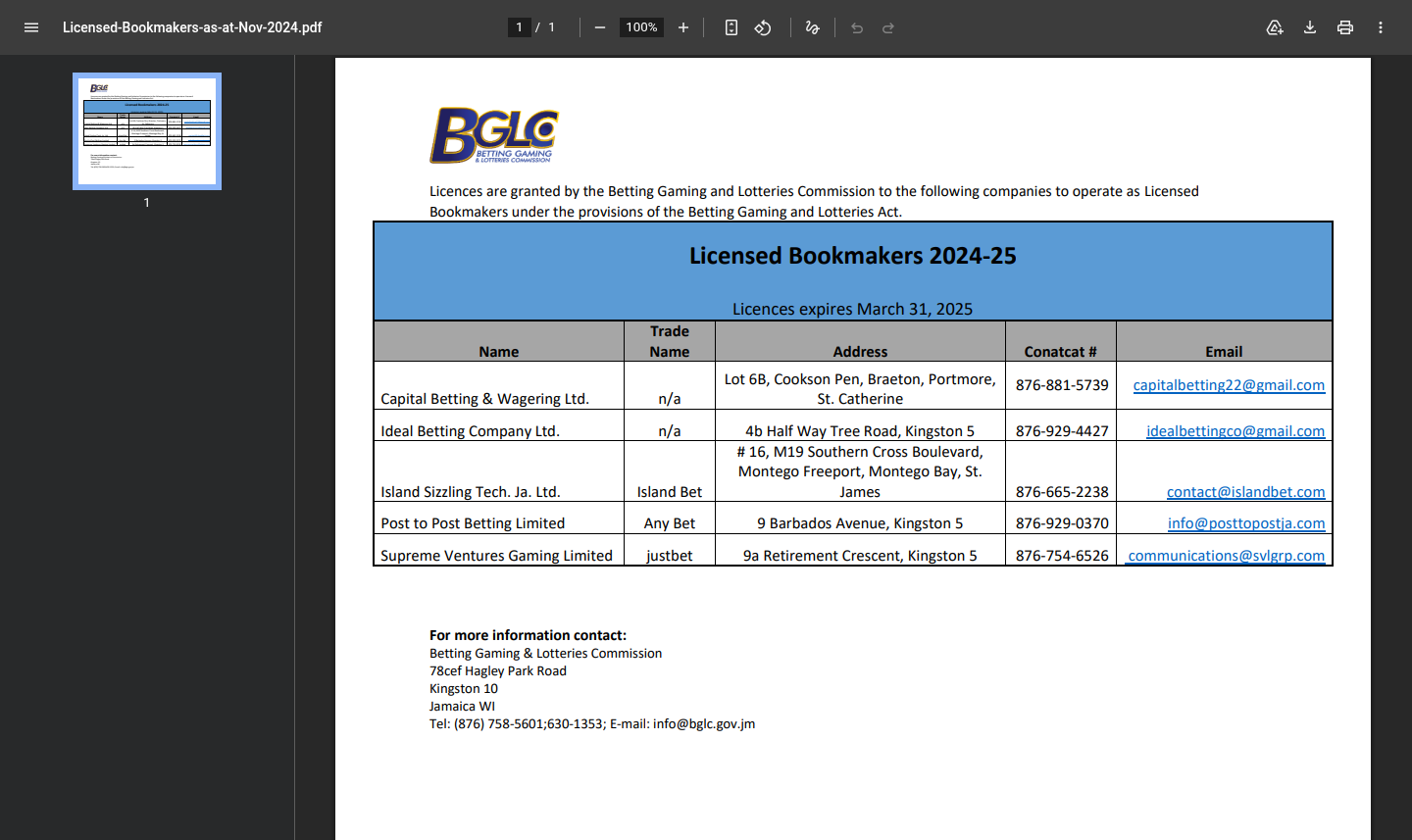
The decisive date in the available record is 31 March 2025. A Betting, Gaming and Lotteries Commission (BG&LC) bookmaker list for 2024–25 names Any Bet alongside Post to Post Betting Limited, but the listed period has expired and the document does not identify anybet.com. The record was checked on 24 August 2026, so it cannot by itself establish that the named business or the exact website currently holds valid Jamaican authorisation.
That produces an amber signal, not a finding that the service is a scam and not confirmation that it is currently licensed. The historical name-to-company connection is useful, while the current licence status and the connection between the regulated entity and the exact domain remain open. No account, deposit or withdrawal test was performed.
The dated register change that controls the assessment
The strongest supplied evidence is the BG&LC 2024–25 bookmaker list. It names Any Bet and Post to Post Betting Limited, and its stated period expired on 31 March 2025. Because the check took place on 24 August 2026, that historical listing is not current proof.
| Register question | What the record establishes | What remains unresolved |
|---|---|---|
| Was the trading name listed? | Yes, as Any Bet in the supplied 2024–25 list | Whether it appears in a later valid list |
| Was a company named? | Yes, Post to Post Betting Limited | Whether that company currently operates the service |
| Was the exact domain recorded? | No | Whether anybet.com belongs to the listed licensee |
| Is the cited period still valid? | No; it expired 31 March 2025 | Current authorisation after that date |
A historical licence entry should not be stretched into a present-tense claim. A user checking legality now needs a current competent record that identifies the authorised entity and, ideally, the precise digital service or domain. Until that match is supplied, the appropriate conclusion is that the evidence is incomplete.
Entity, trading name and domain map
Three identifiers must line up before a strong current verdict is possible: the trading name, the legal company and the website address. The packet supports a historical link between the first two. It does not supply a primary record connecting either one to the exact domain.
| Identifier | Supplied evidence | Confidence and limit |
|---|---|---|
| Trading name | Any Bet appears in the BG&LC 2024–25 list | Historical primary evidence only |
| Legal entity | Post to Post Betting Limited is named with the trading name | Historical primary evidence only |
| Website address | anybet.com is the domain under review | Not stated in the regulator record |
| Visual mark | A cached mark was returned for the exact domain | Visual identification only; not licensing proof |
The visual mark helps a reader recognise the recorded website, but a favicon or logo cannot prove company ownership, regulatory status or safety. Likewise, a matching trading name is not enough when another party could use similar wording. A robust verification should compare the current regulator entry, legal company name, domain, website footer and account-payment recipient. Any mismatch should pause registration or payment until it is explained through a competent channel.
The absence of the domain from the supplied list is not proof that the website is unauthorised. It is an evidence gap. That distinction matters: an amber rating records uncertainty without converting uncertainty into an accusation.
Is it legal in Jamaica, and is it legitimate?
The supplied records do not support a simple yes or no. They show that the trading name and company appeared in a Jamaican bookmaker list for a period ending 31 March 2025. They do not show a valid licence after that date or establish that the exact website is covered.
The Betting, Gaming and Lotteries Act is available through Jamaica’s Ministry of Justice legislation library. Its presence identifies the official legal source, but the packet does not include a legal interpretation confirming the current status of this service. Readers needing a binding answer should rely on a current regulator record or qualified Jamaican advice rather than a historical list alone.
“Legitimate” and “not a scam” also require careful treatment. No official adverse finding, corroborated fraud evidence or tested transaction is supplied. It would therefore be unsupported to label the service a scam. It would be equally unsupported to promise that it is safe, licensed today or reliable for withdrawals. The evidence permits only a narrower statement: there was a historical name-and-company listing, while current authorisation and domain ownership remain unverified.
For a practical licence check, compare the current record against all of these details:
- the precise spelling of the trading name;
- Post to Post Betting Limited as the named entity;
- the validity dates and permitted activity;
- any domain or digital-channel details supplied by the regulator;
- the company named in the website terms and payment flow.
The broader licence-check process explains why all five should agree before a green signal is justified.
Payments, withdrawals and identity checks
No payment method, fee, processing time, minimum amount or currency was verified in the packet. No registration, deposit, identity check or withdrawal was attempted. Consequently, there is no evidence-based basis for saying that a particular card, bank route, wallet or cash option is available, nor that withdrawals are fast or slow.
| Transaction area | Verified finding | Safe action before committing money |
|---|---|---|
| Deposits | Not tested; methods and fees unknown | Read the live cashier terms before paying |
| Withdrawals | Not tested; limits and times unknown | Save the displayed rules before depositing |
| Identity verification | Requirements not supplied | Confirm accepted documents and name matching |
| Account currency | Not supplied | Check conversion rates and possible charges |
| Payment recipient | Not supplied | Confirm it matches the expected legal entity |
Identity verification, often called KYC, can affect access to funds, but no brand-specific requirement is established here. Before depositing, a customer should confirm when identification is requested, which documents are accepted, whether proof of address is needed and how long unresolved verification may hold a withdrawal. Those are questions, not claims about actual practice.
Keep copies of the terms visible at registration, deposit confirmation, transaction reference, account balance and any withdrawal request. A timestamped record is more useful than memory if a disagreement develops. General preparation for payment checks is available in the payments guide.
The absence of a withdrawal test is especially important. A successful deposit does not demonstrate that withdrawal controls work, and an individual report cannot establish the typical experience. No claim about payout reliability should be drawn from this dossier.
Complaints, reports and escalation order
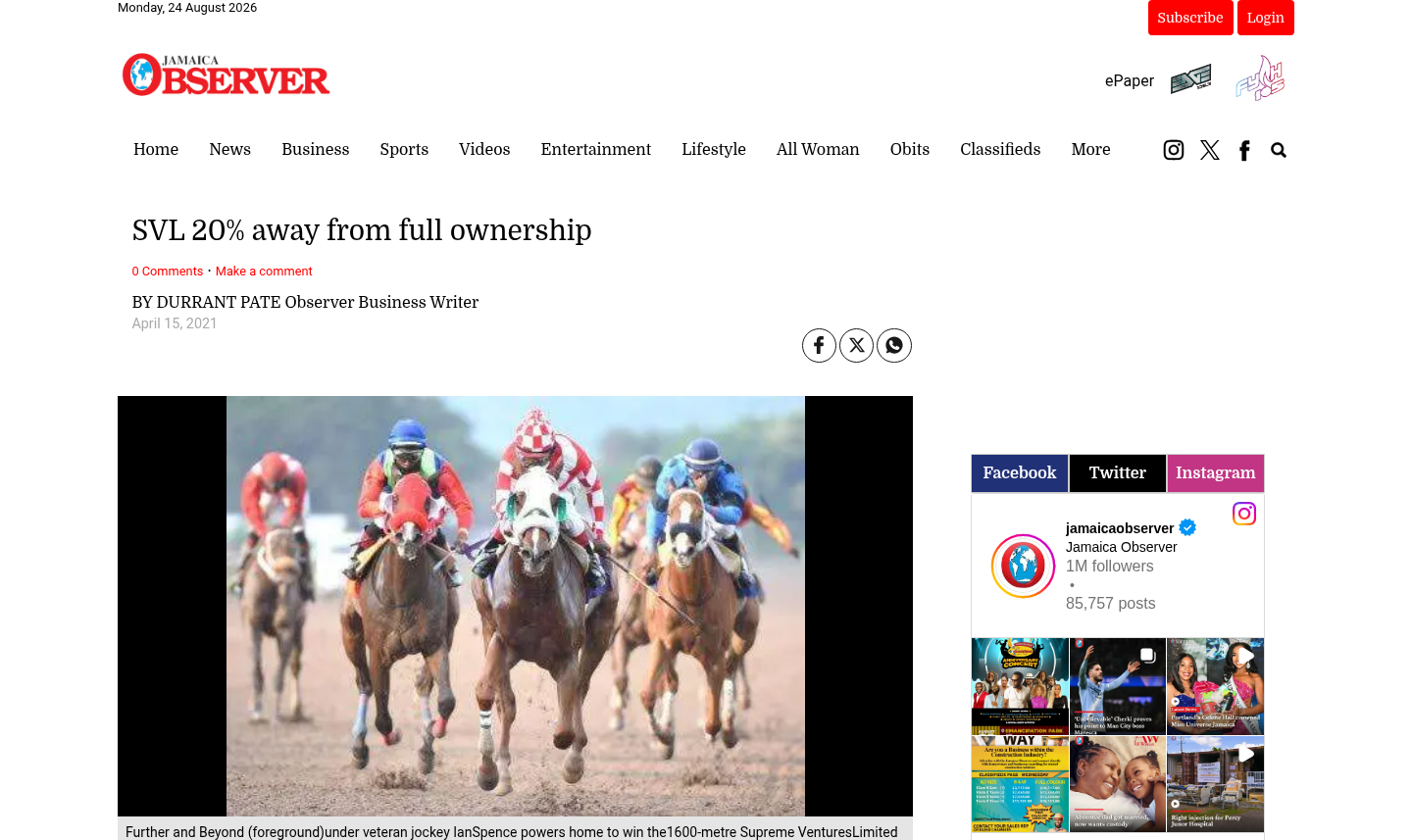
The supplied dated media context concerns brand activity or reported experience, but it is not fact-checked proof of licensing, wrongdoing, safety or a typical customer outcome. It should be treated as background only.
A complaint should begin with the vendor. State the account identifier, transaction reference, amount, date, requested remedy and a reasonable response deadline. Avoid sending full card numbers, passwords or unnecessary identity documents in ordinary messages. Preserve the original correspondence and any case number.
If the issue remains unresolved, the Consumer Affairs Commission portal states that the CAC accepts consumer complaints after the consumer first raises the matter with the vendor. That sequence makes the initial written complaint important.
| Stage | Evidence to retain | Purpose |
|---|---|---|
| Vendor contact | Message, case number and requested remedy | Gives the business a chance to resolve the issue |
| Follow-up | Dates, replies and transaction records | Shows the chronology and unresolved point |
| CAC escalation | Vendor correspondence and supporting documents | Supports an unresolved consumer complaint |
| Regulatory query | Current licence question and entity details | Seeks clarification of regulated status, not a guaranteed refund |
A regulator query and a consumer complaint serve different purposes. Licensing authorities address regulatory status and conduct within their remit; the CAC route concerns unresolved consumer issues. Neither route guarantees recovery. The complaints guide offers a structured checklist for preparing a concise file.
Clone and impersonation checks
Because the primary record does not name the domain, clone detection deserves extra attention. Start by typing the address independently rather than following a message or social-media promotion. Confirm that the address is exactly anybet.com, with no added words, substituted letters, unusual subdomains or unexpected country-code ending.
A secure connection only encrypts traffic; it does not prove that the business is licensed or genuine. Compare the legal company named in the website terms with Post to Post Betting Limited, but remember that copied company details can appear on an imitation website. Stronger confirmation would come from a current regulator record or direct competent confirmation linking the company and exact domain.
Warning signs include pressure to pay quickly, requests for cryptocurrency or transfer to an unrelated personal recipient, demands for remote access to a device, and instructions to reveal a password or one-time code. Those signs justify stopping the transaction, but their inclusion here does not mean they were observed on the reviewed service.
Use the following sequence before sign-in or payment:
- check the spelling and certificate details of the domain;
- compare the legal entity in the terms with the historical record;
- look for current licence dates and scope;
- verify the payment recipient before approval;
- leave if support asks for credentials or remote access.
The supplied logo is only a recognition aid. Logos and favicons are easy to copy, so they must never replace entity and licence verification.
Continue only after checking →
Main risks and unresolved questions
The largest risk is temporal: the only supplied bookmaker listing expired more than a year before the evidence check. The second is attribution: the record does not state the website address. Together, these gaps prevent a green signal even though the historical entry is primary evidence.
| Issue | Why it matters | Present status |
|---|---|---|
| Current licence | Determines whether authorisation remains valid | Not established |
| Domain-to-entity link | Connects the website to the named company | Not established |
| Withdrawal performance | Tests access to funds in practice | Not tested |
| Payment terms | Reveals fees, limits and recipients | Not supplied |
| Identity process | Can affect account access and withdrawals | Not supplied |
| Official adverse action | Could justify a red signal | None supplied |
Amber does not mean “unsafe”; it means that the available evidence leaves material questions open. Equally, the absence of an adverse record in this limited packet is not proof that no complaint, sanction or problem exists. The packet is bounded and should not be read as a complete search of every official database or customer account.
Anyone considering play should resolve the current licence and domain questions first, then read the live transaction and identity terms. Gambling should use only money that can be lost without affecting essentials. Support and limit-setting information is available through responsible gambling guidance, with urgent help for immediate concerns.
Use the separated play route → only after completing those checks.
Evidence chronology, method and corrections
The chronology is short but decisive. The media context is dated 15 April 2021. The primary bookmaker document covers 2024–25 and expired on 31 March 2025. All supplied records were checked on 24 August 2026. The gap between expiry and checking is why the historical listing cannot carry a current green conclusion.
The method gives primary records the greatest weight, separates operator-controlled visual material from licensing proof, and treats user or media context as contextual only. It does not infer missing payment methods, licence renewals, ownership, customer outcomes or misconduct. The signal rules are straightforward: green requires current primary support for the precise entity and domain; red requires an official adverse record or corroborated documented evidence; unresolved material evidence remains amber. More detail appears in the methodology and editorial policy.
A correction should identify the disputed statement and provide a dated competent record. Useful material would include a current BG&LC listing, an official confirmation connecting the exact domain to Post to Post Betting Limited, or authoritative documentation showing that the historical relationship changed. Screenshots without a verifiable source, promotional claims and anonymous reports cannot independently settle licensing. Corrections can be submitted through contact.
Frequently asked questions
Is AnyBet currently licensed in Jamaica?
The supplied BG&LC 2024–25 list names Any Bet and Post to Post Betting Limited, but that period expired on 31 March 2025. The record does not state anybet.com, and no later valid licence was supplied. Current Jamaican authorisation for the exact domain is therefore not established.
Is AnyBet a scam or legitimate?
The packet contains no official adverse finding or corroborated fraud evidence, so calling it a scam would be unsupported. However, the expired historical listing and missing domain match also prevent a current safety or legitimacy assurance. The evidence signal is amber.
Does the BG&LC record cover anybet.com?
Not on the supplied evidence. The bookmaker list names the trading name and Post to Post Betting Limited, but the source claim says the domain is not stated. A current primary record linking the exact address to the entity is still needed.
Were deposits or withdrawals tested?
No. No account, deposit, payment, identity-verification or withdrawal test was performed. Payment methods, fees, limits, processing times and withdrawal reliability remain unknown.
What should I do if a withdrawal is delayed?
Write to the vendor first with the transaction reference, amount, date and requested remedy, and retain every response. If the consumer issue remains unresolved, prepare the correspondence and supporting records for the appropriate complaint channel, including the CAC where applicable.
How can I avoid a cloned website?
Type anybet.com independently, inspect the exact spelling, compare the legal entity and current licence details, and verify the payment recipient. Do not rely on a logo, favicon or secure connection as proof, and never disclose a password or one-time code.