
William Hill Jamaica evidence check: domain, licence and risks
The first check is not whether a familiar name appears on the screen. It is whether the address bar shows williamhill.com exactly. A copied logo, sponsored search result or convincing sign-in form cannot establish who controls a website. Lookalike domains can add words, swap letters, use misleading subdomains or place the familiar name elsewhere in a longer address.
The evidence signal is amber. The recorded domain is clear, but an exact Jamaican operator match has not been established. The BG&LC directory reviewed on 24 August 2026 did not present a current exact-domain Jamaican licence match. That finding does not prove fraud, and it does not establish that every use of the service is lawful or locally authorised. No account, deposit or withdrawal test was performed.

Quick lookalike-domain test
Before entering a password, identification document or card detail, compare the complete hostname with williamhill.com. The hostname is the part after https:// and before the next slash. On a genuine-looking but unrelated address, the familiar words may appear in the path, in a subdomain controlled by somebody else, or beside an extra hyphen.
| Address pattern | What it means | Practical response |
|---|---|---|
williamhill.com | Exact recorded hostname | Continue with the licence and account checks below |
help.williamhill.com | A subdomain of the recorded hostname | Confirm every letter and avoid links received unexpectedly |
williamhill.example.com | Belongs to example.com, not the recorded hostname | Do not sign in or send money |
william-hill.example | A different domain using familiar words | Treat as unverified |
| Shortened or hidden link | Final destination is not visible | Do not use it for sign-in or payment |
A padlock only indicates that the connection is encrypted; it does not prove that the recipient is the expected operator. Password-manager behaviour can provide another warning: if a saved credential does not appear on a supposed sign-in page, stop and inspect the hostname rather than manually pasting the password.
Recorded domain and operator match
The exact domain supplied for assessment is williamhill.com. A cached visual mark was returned for that domain on 24 August 2026, but this is operator-level visual context rather than proof of a Jamaican licence or legal entity. A copied mark can also appear on an imitation website, so the image must never replace a hostname check.
The packet does not establish the exact Jamaican operator behind the domain. There is no supplied record tying a named local legal entity, the exact hostname and a current Jamaican authorisation together. That missing three-way match is important because a brand name alone cannot answer who holds a customer balance, processes identity documents or handles a dispute.
| Verification element | Packet result | Confidence boundary |
|---|---|---|
| Recorded hostname | williamhill.com | Exact domain supplied and visually referenced |
| Exact Jamaican operator | Not established | No legal entity should be inferred |
| Current Jamaican exact-domain licence | Not located in the directory reviewed | Absence from the reviewed entry is not, by itself, proof of illegality |
| Licence expiry | Unknown | No date was supplied |
| Deposit or withdrawal performance | Untested | No transaction was conducted |
Users should keep the legal entity, licence number, regulator and terms shown during registration. If these details are absent, inconsistent or changed at payment time, do not assume the familiar name resolves the discrepancy.
Jamaican licence position
The local primary starting point is the BG&LC licensed gaming operators directory. During the review dated 24 August 2026, the directory did not present an exact-domain match linking the service to a current Jamaican licence. The result supports an amber signal because the local authorisation question remains open.
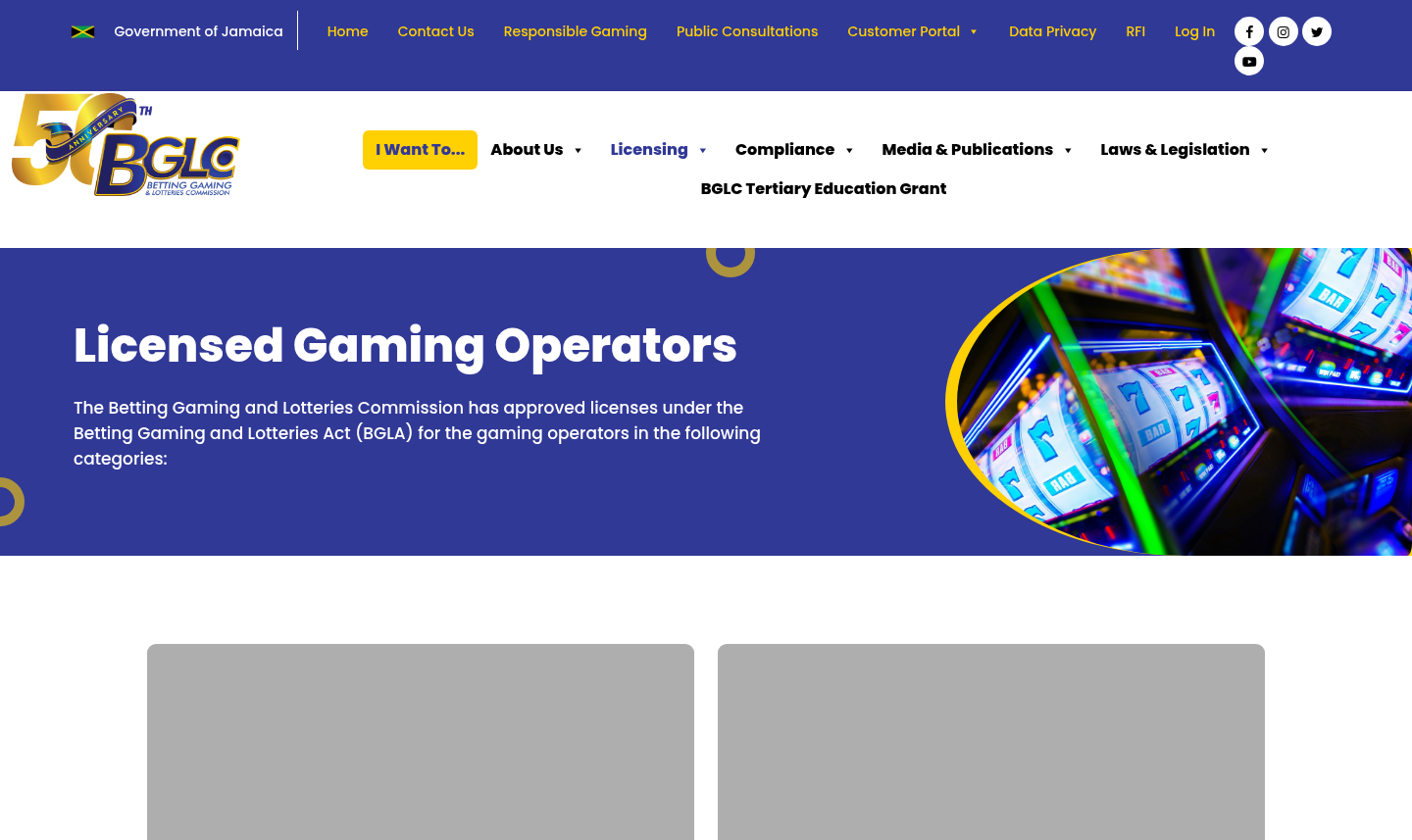
The relevant legislation is available through the official Betting, Gaming and Lotteries Act. The supplied evidence does not determine how every provision applies to an individual user, transaction or remotely supplied service. It also does not support saying that the domain is Jamaican-licensed merely because it is reachable from Jamaica.
A proper licence match should connect the exact hostname, legal operator, authorisation number, permitted activity and current status. If one element belongs to another country, another entity or another domain, it is not an exact Jamaican match. Use the licence-check guide to organise those fields before depositing.
Scam or legitimate: what the amber signal means
The available records do not support calling William Hill a scam. They also do not support presenting the exact domain as currently licensed in Jamaica. The responsible conclusion is narrower: the hostname is recorded, while the local operator-and-licence match remains unestablished in the supplied evidence.
| Possible claim | Supported? | Reason |
|---|---|---|
| The exact recorded domain is williamhill.com | Yes | It is identified in the packet |
| A current Jamaican licence covers that exact domain | No | No exact-domain match was located in the reviewed BG&LC directory |
| The service is proven fraudulent | No | No official adverse record or corroborated wrongdoing evidence was supplied |
| Withdrawals are proven reliable | No | No withdrawal test was performed |
| User reviews prove a typical result | No | Reports are contextual, not fact-checked proof |
“Legitimate” can refer to several different questions: whether a domain is authentic, whether a legal entity exists, whether a regulator authorises an activity, or whether a particular transaction will be handled fairly. One answer cannot substitute for the others. The amber signal therefore calls for verification and limited exposure, not a red accusation or a green endorsement.
Sign-in, identity and payment exposure
A sign-in can expose more than a password. Reused credentials may affect other accounts, while identity checks can involve photographs, addresses and official documents. Payment attempts can disclose card or wallet information and may create later disputes about merchant identity, conversion or account ownership. Because no account was opened, the packet does not establish which payment methods, currencies, limits or verification steps are available to a Jamaican customer.
Before paying, record the exact hostname, displayed legal entity, transaction currency, stated fees and the name expected on the payment statement. Compare those details with the terms presented at registration. Do not proceed if the payment recipient appears unrelated, if instructions move into private messaging, or if somebody demands an extra transfer to release an existing balance.
| Stage | Save before continuing | Stop if |
|---|---|---|
| Registration | Hostname, date, legal entity and applicable terms | Entity or jurisdiction is missing or changes unexpectedly |
| Identity check | Requested document type and stated purpose | Documents are requested through an unrelated address or chat account |
| Deposit | Amount, currency, method and recipient description | Payment is redirected to an unexplained recipient |
| Withdrawal | Request time, amount, status and reference number | Release depends on a new fee sent outside the account flow |
For general preparation, consult payment checks. Never send additional money solely because an unsolicited contact claims it will unlock a withdrawal.
Withdrawals and account verification
No deposit, account or withdrawal test was performed, so there is no direct evidence about processing speed, successful cash-out, limits, fees or account restrictions. Any exact promise about timing would be unsupported. Marketing language and an available withdrawal button do not demonstrate that funds will arrive.
Complete identity verification only through a hostname already verified independently. Keep readable copies of what was submitted, but store them securely because identification records are sensitive. Note the date, file type and confirmation reference without sharing unnecessary document numbers in public complaints.
When requesting a withdrawal, preserve the balance immediately before the request, the amount, selected method, displayed estimate and every status change. If a request is cancelled, ask for the specific contractual reason in writing. Separate ordinary verification from unusual demands: a request matching published terms is different from a surprise instruction to pay a tax, insurance charge or unlocking fee to an unrelated recipient.
A delayed transaction is not automatically evidence of fraud. It can still justify a documented query and escalation. Conversely, a small successful withdrawal does not prove that every later transaction will succeed. Keep stakes and balances within limits you can afford to lose, and use responsible gambling support if play is becoming difficult to control.
User reports and their limits
The supplied user-review capture provides dated context about reported experiences associated with the domain. It is not primary evidence of licensing, wrongdoing, safety or a typical customer outcome. Reviews can be incomplete, mistaken, incentivised, duplicated or impossible to verify from the public text alone.
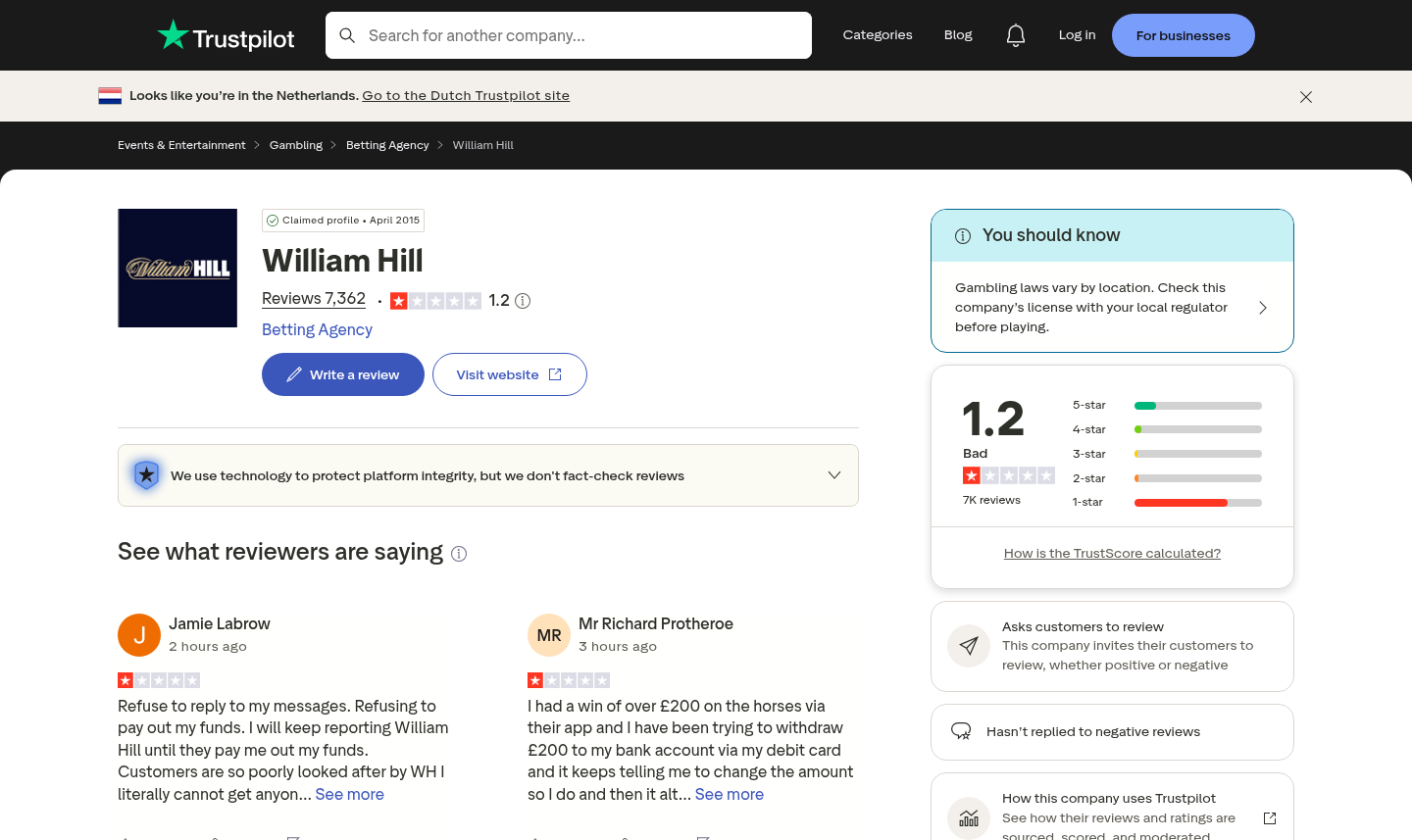
A useful report may help identify questions to ask, such as whether a withdrawal reference exists or whether support gave inconsistent explanations. It cannot establish that the same facts apply to another account. Positive ratings also cannot replace an exact licence match, while negative ratings alone cannot justify a fraud finding.
When assessing a complaint, look for a clear chronology, transaction references, quoted terms and evidence that the customer first contacted the service. Remove emotional conclusions and test each factual claim separately. This approach preserves potentially useful warning signals without treating an unverified review platform as a regulator, court or transaction audit.
Continue only after checking →
Complaint route and recovery steps
Start by raising the issue with the service through the verified account channel. State the account identifier, transaction reference, amount, date, desired resolution and a reasonable response deadline. Avoid sending full card numbers, passwords or complete identity documents in an ordinary message.
If the matter remains unresolved, the Consumer Affairs Commission complaint portal is the supplied official route. The CAC indicates that consumers should first raise the problem with the vendor. A submission should distinguish documented facts from suspicions and include the earlier complaint and response.
| Order | Action | Evidence to retain |
|---|---|---|
| 1 | Secure the account and verified email | Security alerts and change confirmations |
| 2 | Contact the service in writing | Message, reference number and response |
| 3 | Contact the payment provider where appropriate | Transaction identifier and dispute outcome |
| 4 | Escalate an unresolved consumer issue | Vendor complaint, chronology and supporting records |
| 5 | Seek urgent assistance if money or identity is actively at risk | Fraud alerts, unauthorised transactions and official reference numbers |
The complaints guide provides a structured record list. If there is immediate financial or identity danger, use urgent help. Recovery is not guaranteed, and nobody should be paid in advance merely for claiming they can recover gambling losses or retrieve a frozen balance.
Clone warning signs and immediate response
Clone defence begins with the hostname, not the appearance. Warning signs include an extra word or letter, a familiar name placed before another company’s domain, a sign-in link delivered without request, pressure to continue in private messaging, unexplained cryptocurrency transfers, or claims that a payment is needed to release existing funds.
If credentials were entered on a suspicious domain, stop using it. Change the exposed password through the independently verified service, then change it anywhere else it was reused. Enable available account protections and review email forwarding rules, payment activity and recent sessions. Contact the relevant payment provider promptly if financial details or money may be affected.
If identification was uploaded, record exactly which document was exposed and monitor for misuse. Do not return to the suspicious link to gather more screenshots if that increases risk. Existing captures, browser history and payment records may be enough to describe what happened.
The cached logo in the packet is not an authentication tool. Images are easy to reproduce, and a visually accurate sign-in screen can still send data elsewhere. Bookmarks created only after independently confirming the full domain are safer than repeated reliance on advertisements, social posts or message links.
Evidence chronology, unknowns and correction path
All supplied records were checked on 24 August 2026. The BG&LC directory served as the primary local licensing starting point; the official statute location supplied the legislative reference; and the CAC supplied the consumer-complaint route. The favicon and review capture supplied visual or user context only.
| Date checked | Record | What it supports | What it does not support |
|---|---|---|---|
| 24 August 2026 | BG&LC directory | No exact-domain match appeared in the directory reviewed | A universal finding that the service is illegal or fraudulent |
| 24 August 2026 | Official statute location | Location of the Act | Individual legal advice or a domain-specific licence |
| 24 August 2026 | CAC portal | Consumer escalation after contacting the vendor | A guaranteed recovery outcome |
| 24 August 2026 | Cached visual mark | Visual association with the recorded domain | Ownership, licensing or authenticity of another domain |
| 24 August 2026 | User-review capture | Context about reported experience | Proven facts or typical outcomes |
Unknowns include the exact Jamaican operator, any current exact-domain Jamaican licence, licence expiry, available local payment methods, verification sequence, fees, limits and withdrawal performance. These gaps are not filled by assumption.
The conclusion can change if a current primary record connects the exact domain to a named Jamaican operator and authorisation, or if an official adverse record emerges. Corrections should identify the disputed statement, provide a dated competent record and explain the exact domain or entity relationship. Use contact for a documented correction and review the methodology used to separate primary records, operator material and user context.
For adults who have independently verified the destination and accept the unresolved local-licence gap, Use the separated play route →. Do not proceed through a hostname that differs from the recorded domain.
Frequently asked questions
Is William Hill a scam or legitimate?
The supplied evidence does not prove that William Hill is a scam. It also does not establish a current Jamaican licence for the exact domain. The appropriate signal is amber: verify the full hostname, legal entity and regulatory position before sharing information or money.
Is William Hill legal in Jamaica?
No definitive domain-specific legal conclusion is supported. The BG&LC directory reviewed on 24 August 2026 did not present an exact-domain match for williamhill.com. Accessibility from Jamaica is not the same as local authorisation, and the supplied statute is not a substitute for individual legal advice.
Which domain was checked?
The recorded domain is williamhill.com. Check every letter in the address bar before signing in. A familiar name inside a longer or different domain, a copied logo, or a padlock does not establish that the destination is the recorded service.
Were deposits or withdrawals tested?
No. No account was opened and no deposit, identity check or withdrawal was attempted. Payment availability, fees, limits, verification demands and processing times therefore remain unknown for a Jamaican customer.
What should I do if a withdrawal is delayed?
Save the request time, amount, status, transaction reference and relevant terms, then contact the service through the verified account channel. Ask for the specific reason in writing. If unresolved, consider the payment provider and the appropriate consumer complaint route without paying an unexplained release fee.
How can I report incorrect licence information?
Provide the exact disputed statement, the full domain, the legal entity, licence number, current status and a dated primary record. A correction can then be assessed without relying on screenshots, promotional claims or user reviews alone.